News:

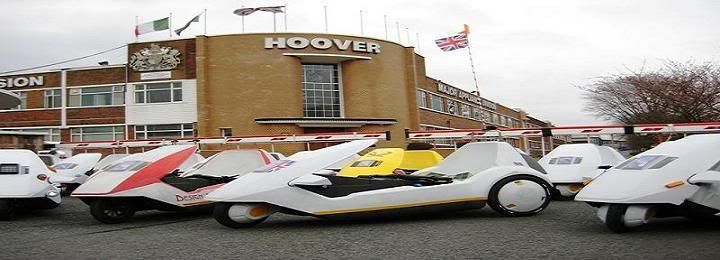
C5alive filming with "oldgoldtech.com" at Brooklands Museum - 13th November 2010
http://c5alive.co.uk/forum/index.php?topic=1440.0

Main Menu

Fitting a front disk brake ...

Started by alexbromo, 07, November, 2010 - 22:20:08

Previous topic - Next topic

alexbromo

Due the poor performances of C5's front brake, one of the first idea i had was fitting a new disk brake.

I seen other guys on the forum who have made very good solution and inspired me.

Today is possible find clamps and rotors for bicycle application, appropriate for C5 at very cheap price, so i bought on Ebay a Promax mechanical clamp and a 140mm rotor (the smallest available) all for 35 Euro of total cost, and both can be installed with no radical mods.


To install the rotor on the wheel, i decided to machine two aluminium circular pieces: an external flange to bolt on the rotor, and a small internal ring to put inside the wheel's hub; these elements will be bolted together using three screws, in a sandwitch configuration with the hub's wall inside.

First of all, i machined the side of the wheel for depth of 15mm, to create the room to place the external flange


then I turned twho pieces from an aluminium bar, to realize the flange and the internal ring


... two pieces are these quota:

rotor flange:
- external diameter: 55mm
- internal diameter: 33mm
- width: 7.5mm
- #3 holes @120° diam. 4.5mm + 7mm bolt's head housing
- #6 holes for standard ISO six bolts pattern (5x0.8M)

internal flange:
- external diameter: 27mm
- internal diameter: 13mm
- width: 7mm
- #3 threaded holes @120° - 4x0.7M


Below the pieces finished:


... then the internal ring has been cut, to permit to better accommodate in the wheel's hub when screws will be tighten ...


The ball bearing cup has been filed of 1mm, to permit to reinsert it correctly in to the hub:


... and here the complete kit:


The hub has been holed (#3 at 120°) to permit to get through three screws:


Finally was placed the internal ring (using a large bolt to insert it in the wheel), and screwed with the rotors' flange ...


... then the disk has placed and bolted to the hub.


The group is firmly blocked to the wheel, that is clamped between two aluminum rings.

Next step was to build the clamp's support to the fork I shaped using a piece of 2.5 mm thickness aluminium sheet ...


The support was screwed to the fork using a couple of allen screws; i used a pair os special threaded rivets placed using a tool that firmly shots it in the prepared holes:


... and this is the completed assembly.


:)

Alex Bromo

MikeDX

Alex

You should start selling this kit. I would buy two immediately! :)

alexbromo

Quote from: MikeDX on  07, November, 2010  - 22:29:37
Alex

You should start selling this kit. I would buy two immediately! :)

Thank you Mike !  :D

Next day i'll put the mechanical design with quotas of items, if someone should be interested in build it ...

Alex Bromo

PLOD11

Brilliant mate, i would have two as well ....

Certainly might have a go next year at doing the same .. 

John

aladds

Having recently bought a rotor and calliper for exactly this purpose, I think I'll be following a similar set of steps very shortly! :-)

Thanks!

Retro Andy

Very nice indeed, I would like to be able to do that.

Retro Andy.

alexbromo

#6
I have not a lot of experience using the lathe, this little work represent my first attempt to build something of useful.

I used a frind's equipment (lathe, precision colum drill and utensils) and i spent many hours to realize it, i guess almost ten times more than a trained worker ... ;D 

The most difficult step for me was in machining the plastic wheel, due the difficult to place firmly in the lathe without damage it; so a couple of times during work it is jumped out  :( ... to solve the problem i turned an alloy cylinder to slip into the hub, so to tighten firmly the chuck around the hub.

Alex Bromo

frankev

Brilliant work, alexbromo

I wish I had the machinery and the skills to do the same.  :o  I have a spare front wheel, so if anybody is going on the market with this disk brake as a "ready to mount" set, please let me know.

Frank   _o_

techytype

A cracking bit of engineering, well done.

i wonder to save the wheels hub being turned in a lathe (kit only the lucky few have access to), to allow room for the disk, if stretching the forks as is done when fitting the metal front wheel, will work as well?

the rivets in the forks for the mounting bolts are a very neat solution, the tool is a bit specialised for most, so  i'd guess many would use a welder to add a mounting plate onto the forks - or smile nicely at their local garage mechanic  ;).

i have bought a disk and handlebar lever, intending to fit it to the rear axle, but this gives lots of food for thought.

Alan

frankev

Hi Alan,

Again I refer to the site of Phil, another forum member.
http://www.cypax.net/projects/c5/blog/page13.php?language=en#ironman.
where he  mounted a disk brake on the rear axle. Don't forget the cover plate on the bottom side to protect the disk from being damaged. It looks real good and solid.
Ps. I wonder about your smile to the local garage guy. Here it would bring me an black eye only.  ;D

techytype

another top class bit of work done, a different slant on the idea of filling in the 'triangle' with a bit of plate.

Alan

alexbromo

Quote from: techytype on  09, November, 2010  - 22:30:21
A cracking bit of engineering, well done.

i wonder to save the wheels hub being turned in a lathe (kit only the lucky few have access to), to allow room for the disk, if stretching the forks as is done when fitting the metal front wheel, will work as well?

the rivets in the forks for the mounting bolts are a very neat solution, the tool is a bit specialised for most, so  i'd guess many would use a welder to add a mounting plate onto the forks - or smile nicely at their local garage mechanic  ;).

i have bought a disk and handlebar lever, intending to fit it to the rear axle, but this gives lots of food for thought.

Alan

I guess not possible to avoid to machine the wheel to implement this solution: to prevent the interferece of the group's internal ring with the ball bearing cup, the rotor's flage is lifted into the hub for a minimum of 17mm; furthermore stretch the forks does not help, because in this configuration all the group must fit in the hub's width.

Welding a steel plate is a good and solid solution. Otherwise, to avoid to welde, should also be possible to build an aluminium plate and secure it to the fork using a couple of robust self-threading screws.

Alex Bromo

techytype

Hi Alex,

been working on my own design. I'm using a cheap 180mm rota, and also a cheap cable operated ZO0M calliper,

not having the lathe or skills, I've found the rota fits very snugly onto the bearing casing, butting the rota up to the 6 x flat ended wheel splines keeps it 'true'.

I've used 3 rota holes clamping for clamping place, passing long bolt through a 5mm hole in drilled in the webbing, then inserting a nut in the webbing spokes for the bolt.

under breaking there would be a tendency to bend the bolts, the the other three holes are used as 'stoppers'. 5mm high tensile bollt's lock nutted onto the rota so they are held as a kind of spike. a further nut is run onto the end acts as a spacer to fit in between the splines and stop the rota movement on the housing.

just got to mount the caliper now  ;D


Alan


alexbromo

Good done Alan !  ;)

I also seen the standard bicycle rotor fit almost perfectly into C5's hub (only little tight), so it is possible to lock it as you done.

You solution is simple and clean, but (as you told) the screws tends to wrap during braking, so i preferred to build a dedicated support for the rotor and use the original screws to mantains short links for axial stress.

Should be very interesting have some picturs to evaluate your "stopper" solution that I did not completely understood.

:)

Alex Bromo

coverman

If I have understood your rotor  fitment correctly, then a metal band around  the hub would spread the load sufficiently prevent the srews moving under braking loads.